
Forge of Empires: Build a City
InnoGames GmbHStrategy
4.245.41K Reviews
- Version
- 1.341.18
- Installs
- 10.00M
- Age Rating
- Everyone 10+
Screenshots
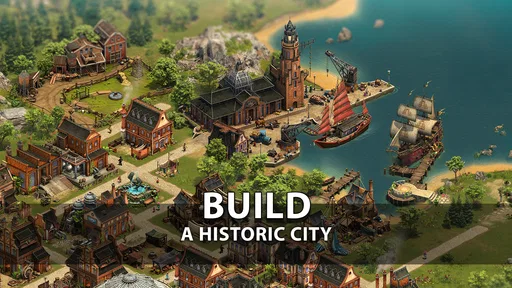
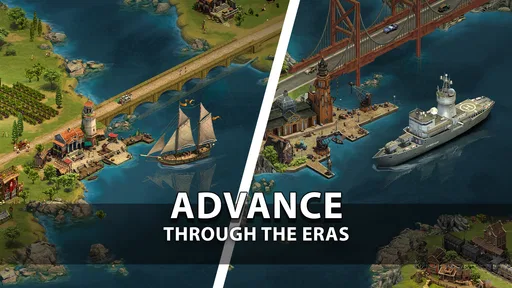
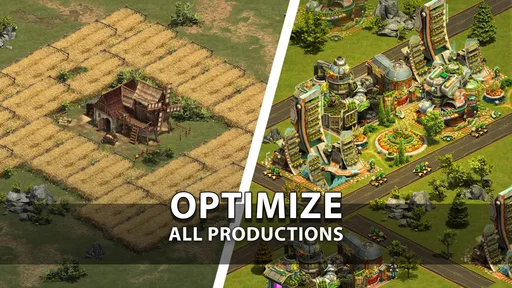
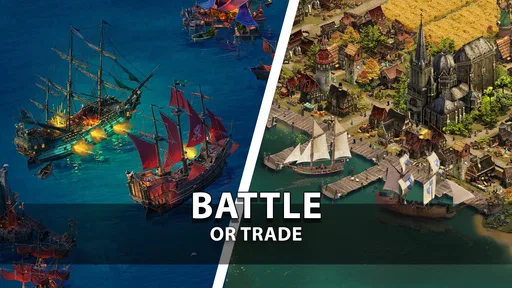
Our Review of Forge of Empires: Build a City
 Analysis by Appyee
I came to Forge of Empires: Build a City for the promise of shaping a settlement across different eras, but its most lasting appeal is the way city planning turns into a series of small strategic choices. A building is not just decoration: where it fits, what it helps produce, and how it supports the next step all matter. That makes this free strategy game from InnoGames GmbH more thoughtful than a simple town-decorating pastime, though it does ask for patience.
Why planning, not just building, is the central skill
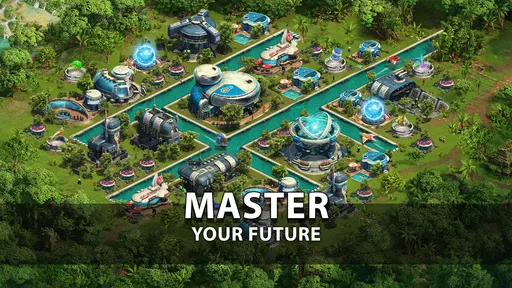
The basic pleasure is easy to understand: begin with a modest settlement, develop it, and watch its appearance change as your civilization advances. The harder part is making room for that growth. A city has limited space, so placing a structure for immediate convenience can make later rearranging necessary. I found that the most satisfying progress came from treating the map as a working plan rather than filling every open patch as soon as it appeared.
That distinction matters if you are choosing between this and a more casual city-builder. Some games mainly reward decoration or quick construction. Here, the city is tied to a broader strategy loop: development, resource management, research choices, and expansion all influence what I wanted to build next. The result feels less like designing a postcard town and more like maintaining a small, evolving system.
How the long-term choices play out
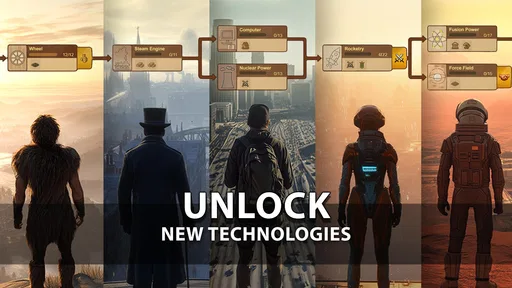
Research gives the progression a direction. Rather than advancing in a single obvious way, I had to consider what kind of development suited my priorities, including military strength or cultural growth. The useful habit is to pause before committing resources to a new goal and ask what it unlocks for the city I actually have, not just what sounds impressive. A technology that looks attractive in isolation can be less helpful than a choice that fits your current bottleneck.
That makes the game rewarding for people who like to set a small objective and return to it. I might decide that my next session is about improving the layout, while another day I focus on progress through research or a quest. It is a flexible rhythm, but not a particularly fast one: if you expect every visit to produce a dramatic leap forward, the gradual pace can feel slow.
A practical way to manage space and resources
My most useful city-building tip is to leave room for change. Early placements are tempting to treat as permanent, but a layout that works at one stage may become awkward as the settlement develops. Before adding a building, I would look at the whole arrangement and consider whether it blocks a more useful pattern later. Rearranging can be satisfying when it improves the city, but doing it constantly can turn a relaxing session into tidying for its own sake.
I also found it helpful to choose one priority for a play session rather than trying to improve everything at once. If I was working on expansion, I focused on the steps that supported that aim; if I was following a quest, I kept its requirements in view while making ordinary city decisions. This simple approach makes the many connected systems easier to follow, especially for a newcomer who might otherwise click from one objective to another without a clear plan.
When the slower pace is a strength—and when it is not
The game’s steady progression suits short check-ins spread across the day better than a single long burst of play. A realistic routine might be to open it during a quiet break, review the city, make one deliberate adjustment, and leave the next goal ready for later. That makes it easy to keep a long-running settlement moving without needing to treat every visit as a major gaming session.
The same structure is a drawback if you want constant action. Combat uses turn-based strategy, so it asks you to think through moves rather than deliver rapid reflexes, and city development can feel measured. Players looking for a compact puzzle with a clean ending, or a direct action game, will likely be happier elsewhere. This is for someone who enjoys returning to a project and seeing how decisions accumulate over time.
There is also a difference between friendly social play and playing entirely alone. Guilds, trading, and player-versus-player competition give the experience a communal side, which I enjoyed when collaboration added a reason to stay engaged. If you prefer a strictly solitary city simulator, those features may not be what draws you in; the core planning loop is still the main reason I would try it, but the social layer can shape how involved you want to become.
For a broad sense of its reach, the game has a 4.2 average from around 1.1 million ratings and has passed 10 million installs. It is free to start, rated Everyone 10+, and includes optional in-app purchases, with individual items ranging from $0.99 to $199.99. I would approach those purchases as optional rather than as a reason to rush: the game is most enjoyable when I set my own pace and make progress through the choices I find interesting.
It was released on March 24, 2015, and the current version is 1.329.15, with Android 9 as the minimum operating-system requirement. In practical terms, that makes checking device compatibility worthwhile before installing, particularly if you use an older phone or tablet. The developer is InnoGames GmbH, and the game’s long-running structure is a good fit for players who enjoy a world that they can revisit rather than finish in a weekend.
Have you ever wanted to be a master architect or a strategic genius? If so, Forge of Empires: Build a City might just be your new obsession. This game invites you to take a journey through time, starting from the Stone Age and progressing all the way to the future. It’s like a history lesson, but way more fun and interactive.
A Time-Traveling Adventure
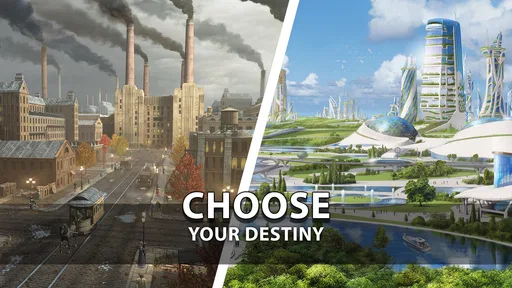
When I first downloaded Forge of Empires: Build a City, I was immediately drawn in by its promise of time travel. The game starts you off with a humble settlement, and it's up to you to transform it into a bustling metropolis. What sets this game apart is the level of detail in every era. From the Stone Age's simplistic huts to the sleek skyscrapers of the Modern Era, each epoch is beautifully rendered and unique.
Gameplay Mechanics and Features
The gameplay is quite engaging. You’ll be responsible for everything from gathering resources to managing your city’s economy. One of my favorite aspects is the research tree. It’s a bit like a choose-your-own-adventure book; your decisions impact the development path of your city. Do you focus on military might or cultural advancement? The choice is yours.
Combat is another exciting element. You can strategize and lead your troops to conquer neighboring territories. The turn-based system is intuitive, making it accessible even if you’re not a seasoned tactician.
Building and Expanding Your Empire
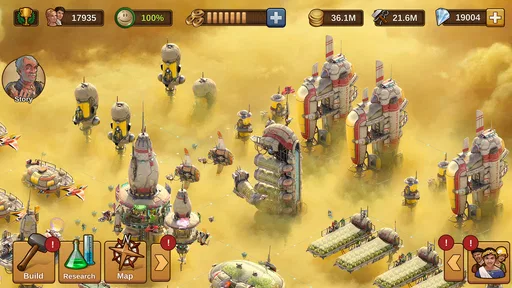
In Forge of Empires, city-building is more than just placing buildings. You’ll need to think strategically about layout to maximize efficiency. I found myself obsessively rearranging structures to squeeze out every bit of productivity. There’s something deeply satisfying about watching your city thrive because of your clever planning.
The game also offers special events and quests, which are a great way to earn extra rewards and keep the gameplay fresh. Whether it’s a seasonal event or a special limited-time quest, these challenges provide a nice break from the routine building and expanding.
Visuals and Soundtrack
The visuals are stunning, with each era offering its own unique style. I was particularly impressed by the attention to detail in the buildings and character designs. The transitions between eras are seamless, and it’s fascinating to see how your city evolves over time.
The soundtrack is equally impressive. It features era-appropriate music that immerses you in the game’s world. Whether it’s the tribal beats of the Stone Age or the orchestral scores of the Industrial Age, the music enhances the entire experience.
Community and Social Interaction
One of the highlights of Forge of Empires is its strong community. You can join guilds, trade with other players, and even battle in PvP arenas. The social aspect of the game adds an extra layer of depth and competition. I found that collaborating with others in a guild made the game even more enjoyable.
The developers frequently update the game, adding new features and addressing player feedback. This commitment to improvement is a big plus in my book.
Final Thoughts
Overall, Forge of Empires: Build a City is a captivating blend of strategy, history, and creativity. It’s perfect for gamers who love to plan and strategize, as well as those who enjoy a good story-driven experience. With its intricate gameplay mechanics, stunning visuals, and engaging community, it’s easy to see why it’s become such a popular title among strategy game enthusiasts.
If you’re ready to embark on a journey through the ages, give Forge of Empires a try. Who knows? You might just become the next great emperor of your very own empire!
Verdict
Strengths of Forge of Empires: Build a City
- Engaging city-building mechanics.
- Rich historical progression.
- Strategic combat system.
- Frequent events and updates.
- Strong community support.
Limitations of Forge of Empires: Build a City
- Can be time-consuming.
- In-app purchases can be pricey.
- Requires constant internet connection.
- Resource management can be complex.
- Some tasks feel repetitive.
Other Releases by InnoGames GmbH
View All
Heroes of History: Epic Empire
Strategy4.5
Similar Picks in This Category
View All
Clash of Clans
Supercell4.5

Plants vs. Zombies™
ELECTRONIC ARTS3.7

Lords Mobile: Kingdom Wars
IGG.COM4.5

Clash Royale
Supercell4.4

State.io — Conquer the World
CASUAL AZUR GAMES4.1

Car Driving School : Car Games
Spark Game Studios3.9
Frequently Asked Questions
What is the main objective of Forge of Empires: Build a City?
Forge of Empires is a strategy game where players build and expand their cities from the Stone Age through modern times. The main objective is to develop a thriving civilization by constructing buildings, managing resources, and engaging in strategic battles. Players must make decisions that will affect the growth and prosperity of their city.
Is Forge of Empires free to play or does it include in-app purchases?
Forge of Empires is free to download and play, but it includes optional in-app purchases. These purchases can enhance gameplay by allowing players to buy premium currency, resources, or special items. While spending money can accelerate progress, the game can still be enjoyed fully without any purchases.
How does multiplayer interaction work in Forge of Empires?
In Forge of Empires, players can interact with each other through trading, messaging, and forming guilds. They can also visit each other's cities and participate in cooperative or competitive activities. The game features a PvP mode where players can compete in battles to gain rewards and climb the leaderboard.
What are the system requirements for Forge of Empires on mobile devices?
Forge of Empires is available on both Android and iOS platforms. For Android users, the game requires a device running Android 5.0 or later. iOS users need a device running iOS 9.0 or later. The game is optimized for seamless performance on most modern smartphones and tablets.
Can progress in Forge of Empires be synced across multiple devices?
Yes, players can sync their progress in Forge of Empires across multiple devices. By linking the game to an account, such as Google Play or Apple ID, players can access their city and continue playing from different devices. This feature ensures that progress is saved and easily retrievable.
Play our best games!


